Paid Ads in Peak Season: When Clicks Get Expensive
The Auction Gets Crowded
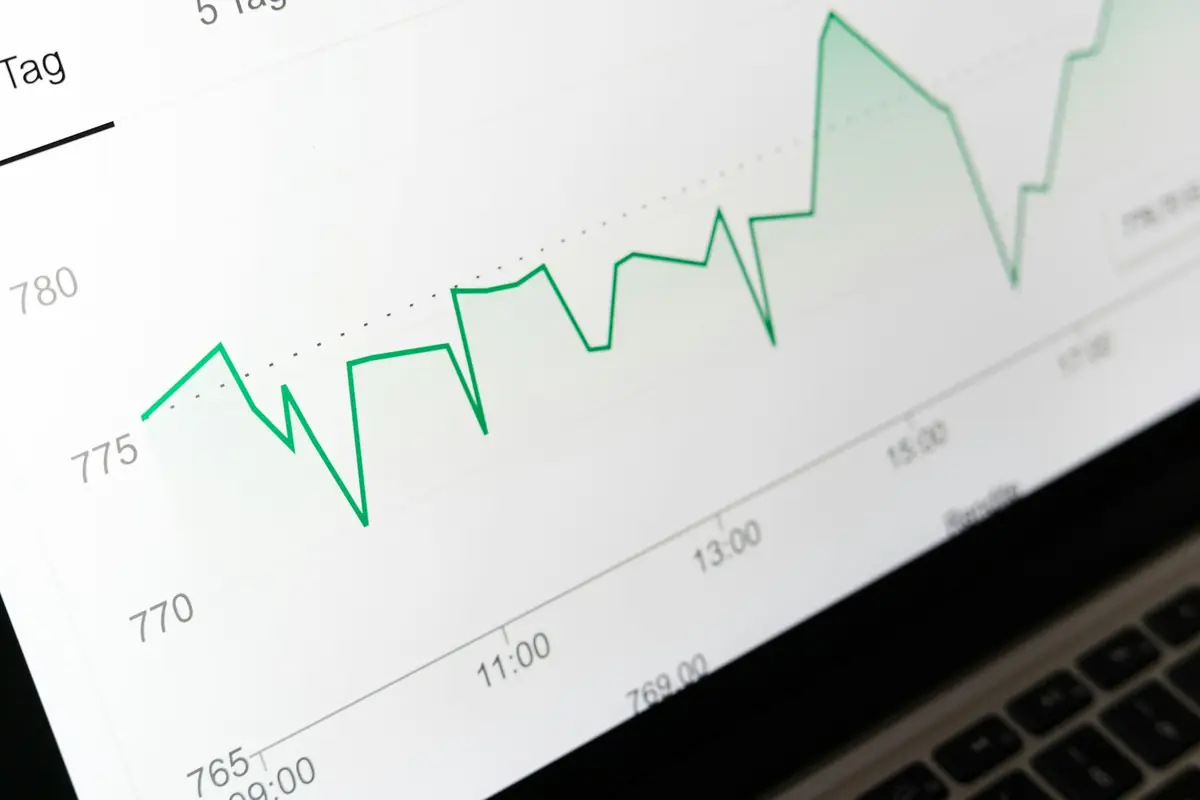
Paid search and paid social are auctions. When more advertisers bid on the same inventory, the price goes up. In the last six weeks of the year, essentially every consumer-facing business in the UK bids at once, and prices rise accordingly — often substantially, and most sharply in the days around Black Friday and in the middle of December.
The exact figures vary enormously by sector and by year, so treat any specific number you read with suspicion. What is reliable is the shape: costs climb from mid-November, peak around Black Friday and again in the deadline week, and fall back in the first days of January.
The mistake small businesses make is not failing to anticipate this. It is responding to it by simply spending more.
Plan the Budget Before the Prices Move
The budget conversation should happen in September or October. By mid-November the numbers have already moved, and any decision you make is a reaction rather than a plan.
Three things to establish before the season:
What a customer is actually worth to you, including repeat purchase where you have the data. This sets the ceiling on what you can pay to acquire one.
What your acceptable cost per acquisition is in December specifically. It is legitimate for this to be higher than in June — the customers are more numerous and more ready — but it needs a number attached, not a shrug.
When you stop. Decide in advance the cost per acquisition at which you switch the campaign off. Making that decision at 11pm on Black Friday with the dashboard open is how businesses lose money.
Our guide to setting a digital marketing budget covers the wider allocation question.
Get Campaigns Stable Before the Peak
This is the single most valuable piece of practical advice in this article.
Every paid platform needs data before it performs. New campaigns, new audiences and new creative all go through a learning period, and during that period performance is unpredictable and efficiency is poor.
Running that learning period during the most expensive weeks of the year is a straightforward waste of money.
So: get your campaigns live and stable by early November. Not the seasonal creative — the underlying campaign structure, audiences and conversion tracking. Then in peak season you are adjusting budgets and swapping creative on a machine that already works, rather than teaching it from scratch at double the price.
If you have not done this and it is already mid-November, the honest advice is to lean on existing campaigns you know perform and resist the urge to build new ones.
Where to Concentrate
With a fixed budget and rising prices, concentration beats breadth.
Protect the bottom of the funnel first
The searches closest to purchase — your brand name, specific product names, "buy X", "X near me", "X delivery" — are the ones to defend. They convert best, they are usually cheaper than generic terms, and competitors will bid on your brand name in December.
Brand defence feels unsatisfying because you would arguably get much of that traffic anyway. In a crowded season, with a competitor's ad sitting above your organic listing, it stops being optional.
Cut broad and exploratory spend
Top-of-funnel awareness campaigns are the first thing to pause in peak season. They are the most expensive per outcome, the hardest to attribute, and the least likely to produce a purchase before your delivery deadline.
Save discovery spend for January, when the auction empties out and the same money buys three times as much.
Retarget properly
Someone who visited your site last week and did not buy is dramatically cheaper to convert than a stranger. In peak season, when strangers are expensive, retargeting audiences become disproportionately valuable.
Segment them: basket abandoners get a different message from category browsers, who get a different message from blog readers. And cap the frequency — a December where the same person sees your ad forty times produces irritation, not sales.
Use your first-party data
Customer lists, email subscribers, past purchasers. These audiences convert well and cost less to reach, and they are the one asset the auction cannot bid away from you.
Timing Within the Season
Early November — costs are still reasonable. This is the cheapest window for building audiences and capturing early planners. Under-used by most advertisers.
Black Friday week — the most expensive period of the year. If your margins are thin, this is a legitimate week to reduce rather than increase spend and let the discounters fight it out.
Early December — costs ease slightly from the Black Friday peak while purchase intent stays very high. For many small businesses this is the best value window of the entire quarter.
The deadline week, roughly 14–20 December — expensive again, but intent is extreme. Ads that emphasise delivery timing and availability outperform ads that emphasise price.
After the posting deadline — a genuine opportunity that most advertisers abandon. Competition drops away, and people still need gifts. Advertise gift cards, e-vouchers and click-and-collect. Our guide to gift cards and vouchers covers this.
Between Christmas and New Year — cheap, and busier than most people expect. Our guide to the between-week covers the behaviour.
Early January — the cheapest clicks of the quarter, and a great deal of planning-stage intent. Do not let your budget run out on 24 December.
Ad Copy for a Crowded Auction
When everyone is shouting about discounts, discount messaging stops differentiating.
What works better in December, particularly for smaller advertisers:
- Delivery certainty. "Ordered by 2pm, dispatched today." From mid-December this beats a discount
- Availability. "In stock now" is powerful when large retailers are running out
- Local. "Belfast based, click and collect today" cannot be matched by a national competitor
- Made here. Genuine local provenance carries real weight in gift buying
Our guide to Northern Ireland brand voice covers finding the specific thing you can say that others cannot.
Where the Ads Land
Paid traffic is expensive traffic, and it is routinely sent to pages that are not ready for it. A campaign is only as good as its destination.
- Send traffic to a page that matches the ad, not to your homepage
- Make sure the page loads fast on a phone. Our speed benchmarks set the targets
- Check the checkout works before you spend a penny. Our checkout optimisation guide covers the fixes
- Match the promise exactly. Our Black Friday landing page guide covers structure
Doubling your conversion rate has exactly the same effect as halving your cost per click, and it is usually easier to achieve.
When Not to Advertise
There are legitimate reasons for a small business to sit out peak season paid media:
- Your margins do not support December acquisition costs
- Your fulfilment cannot handle a volume spike
- You have no delivery capacity left before Christmas
- Your organic and email channels already saturate your capacity
- You cannot monitor the spend during the period
Advertising into a fulfilment bottleneck produces refunds, complaints and bad reviews. That is worse than a quiet December.
Measuring Honestly
Attribution gets messier in December — longer consideration periods, more devices, more cross-channel journeys, more gift purchases that look nothing like normal behaviour.
Two protections:
Watch overall revenue against overall spend, not just platform-reported returns. Every platform claims credit generously.
Ask people. "How did you hear about us?" on your enquiry form remains one of the more accurate instruments available. Our guide to the metrics that matter covers this.
The Summary
Set the budget early. Get campaigns stable before the prices rise. Concentrate on the bottom of the funnel and your own data. Cut discovery spend and save it for January. Compete on delivery and locality rather than on price. Decide your stop-loss in advance, and keep something back for the first week of January when clicks are cheap and intent is high.
Our November marketing calendar sets out the month, and our guide to PPC for Belfast local businesses covers the fundamentals.
If you want a hand planning peak season spend, get in touch with Amigo Studios. We work with businesses across Northern Ireland on digital marketing that survives contact with December.

Senior Developer